Chaotic Times

Partners & Friends,

With all of the world events swirling around us, we just wanted to share some of the thoughts and challenges we are facing. The commodity market is more volatile than ever in history. I have never seen soybean price swings of $1.30 in a day and corn limit up two days in a row. We are currently 60% sold for the 2022 crop and 20% sold for the 2023 crop. The energy situation is a huge unknown. Will the free world be strong enough to quit buying oil and commodities from Russia? How high will oil go? This country can be energy self-sufficient, but it will take some reallocations of products and transportation issues. Do we need to be "green" by a certain date, or can we let market forces adjust the supply and demand? The farm is currently contracted for 75% of the fuel we expect to use this year. Fertilizer prices are almost 3 times higher than a year ago. We have not been able to successfully contract our side dress NH3 needed for this spring. It seems to be a supply issue, but the price is making us wonder about the profitability ratio between corn and soybeans. We were fortunate to contract the dry fertilizer needs for last fall early enough to avoid the last chunk of the price jump, but now, for this fall, we are looking at prices that make applications look too expensive. Financing in this world of tumultuous markets moves and record-breaking inflation has led us to look for some methods to help lock in as much inventory and inputs as possible. Supply issues and manufacturing problems in chemical production have caused changes in our products used for crop protection. We luckily made our last major equipment upgrades before availability issues arose in 2022. The wait time for new equipment is now around 12 months on most large tractors, planters, sprayers, and harvest equipment.


So much to manage around here—that's why we love our jobs!


We are busy delivering grain—over 70,000 bushels in March. The completion of the planter rebuild is within sight. Last minute office tasks and some building remodeling are occupying the work days. There are still winter meetings to attend and financing details to deal with.


World events are overshadowing the decisions we are making about crop insurance and farm program choices (ARC or PLC); the primary election candidates seem so trite. We pray for our fellow farmers in Ukraine daily. Whether or not they are able to plant this spring will make a huge difference in global grain supplies. They account for 30% of both wheat and corn exports worldwide.


Families are doing well—trying to get some time off before things get busy. Weather is nice in Florida. Schoolwork is consuming a lot of bandwidth. Goat showing season starts soon.


Current cash prices (pay attention—these are near record highs!):

Corn—7.34

Soybeans—16.97

Here is a plea from a Ukrainian farmer, please have a read.


Keep in touch,

Steve

Carbon

Partners & Friends,

Winter is supposed to be a slow time on the farm, but it seems urgency still abounds. End of year accounting, seed ordering, chemical procuring, landowner contacts, crop productions, and marketing meetings are all consuming our days. Throw in a milking parlor remodel when extra help is available, and now we have full-time employment. This week another wrench was put into the mix with the informational meeting for the proposed Heartland Greenway Carbon Pipeline. The meeting held in Macomb was very well attended. The crowd was full of questions but none were answered publicly. We were supposed to be able to view the land tracts affected, but somehow ours wouldn't download. The route they proposed cuts through 6 tracts of ground we farm—most of them patterned tiled. Upon further investigation, it seems to me that this is another example of global corporations investing dollars to install infrastructure on our property so they can collect federal tax credit dollars to line their pockets with some nice returns. I am not convinced that pumping carbon into a cavern for 30 years with the hope that we find answers to our carbon production globally is a very wise use of infrastructure. If this was moving oil or natural gas for the public good, we might feel more positive about the project. Locally, there seems to be growing objection to the line. All this while we personally will have difficulty collecting carbon credit dollars because we are already no-tilling and using reduced tillage to preserve carbon on our farm. What a paradox!

We are keeping busy in the office, still cleaning equipment, servicing equipment, converting our milking parlor to a usable work area, and preparing to put more tile in the ground if weather allows.

Winter meeting season is upon us as we evaluate what practices gave us returns this past year and plan for equipment and field treatment modifications.


Cash grain markets are staying very strong—basis levels are historically high for this time of year. Fertilizer prices are not easing yet. We have made some modifications to our chemical programs due to product shortages or extreme price increases. The whole China/Russia situation is getting to be a tense one—I look for some happenings after the Olympics are over.


Family is doing great. We hope to get together this next weekend for some birthday/Christmas celebrating. UChicago delayed the start of classes one week and is now online for 2 weeks before returning to campus. Phyllis' eye is healing nicely. The cold weather this month is balancing out the warm December we experienced.


Fall Prices:

Corn 5.43

Soybeans 12.83


Steve

Black Pipe

Partners & Friends,

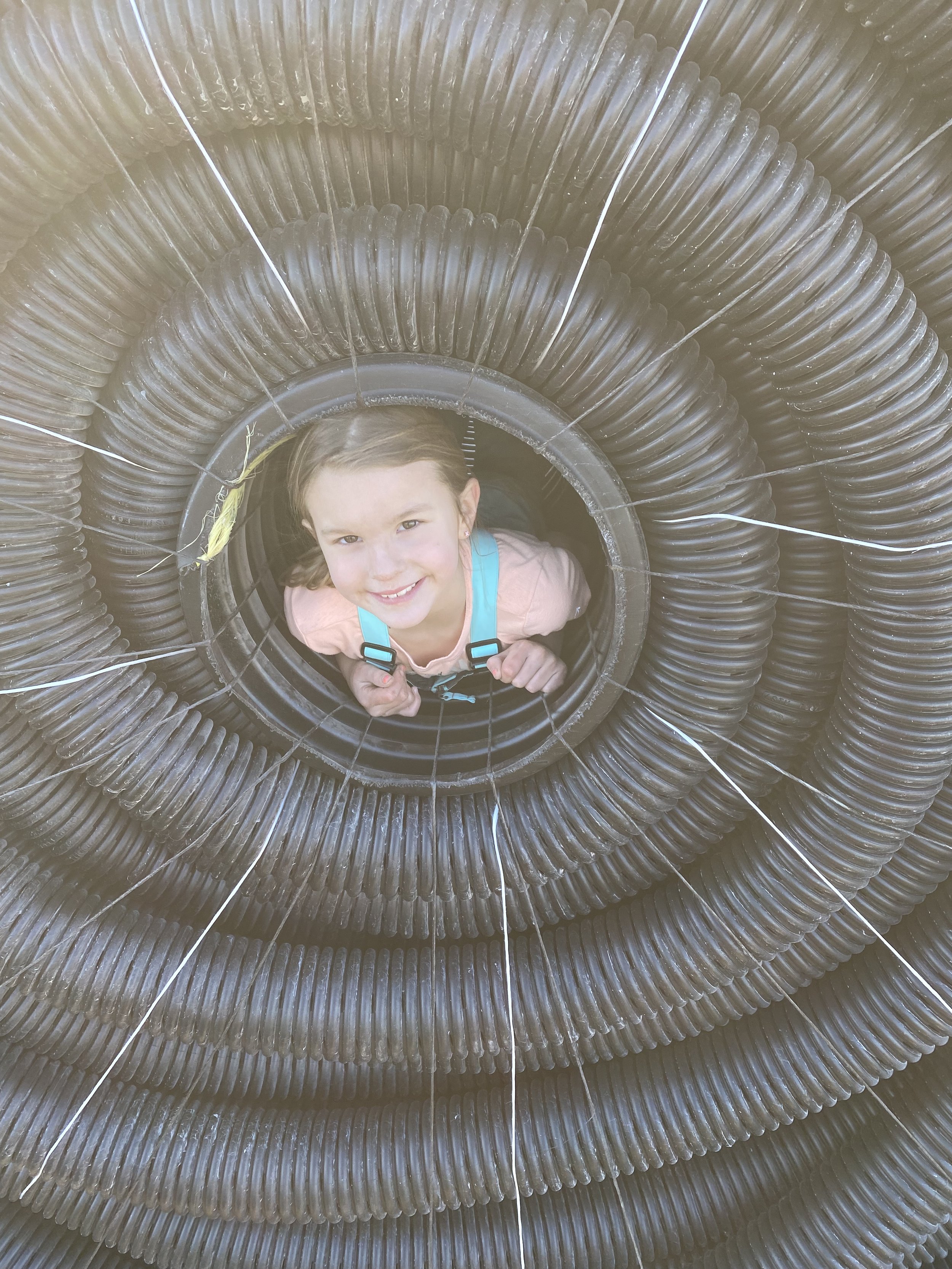
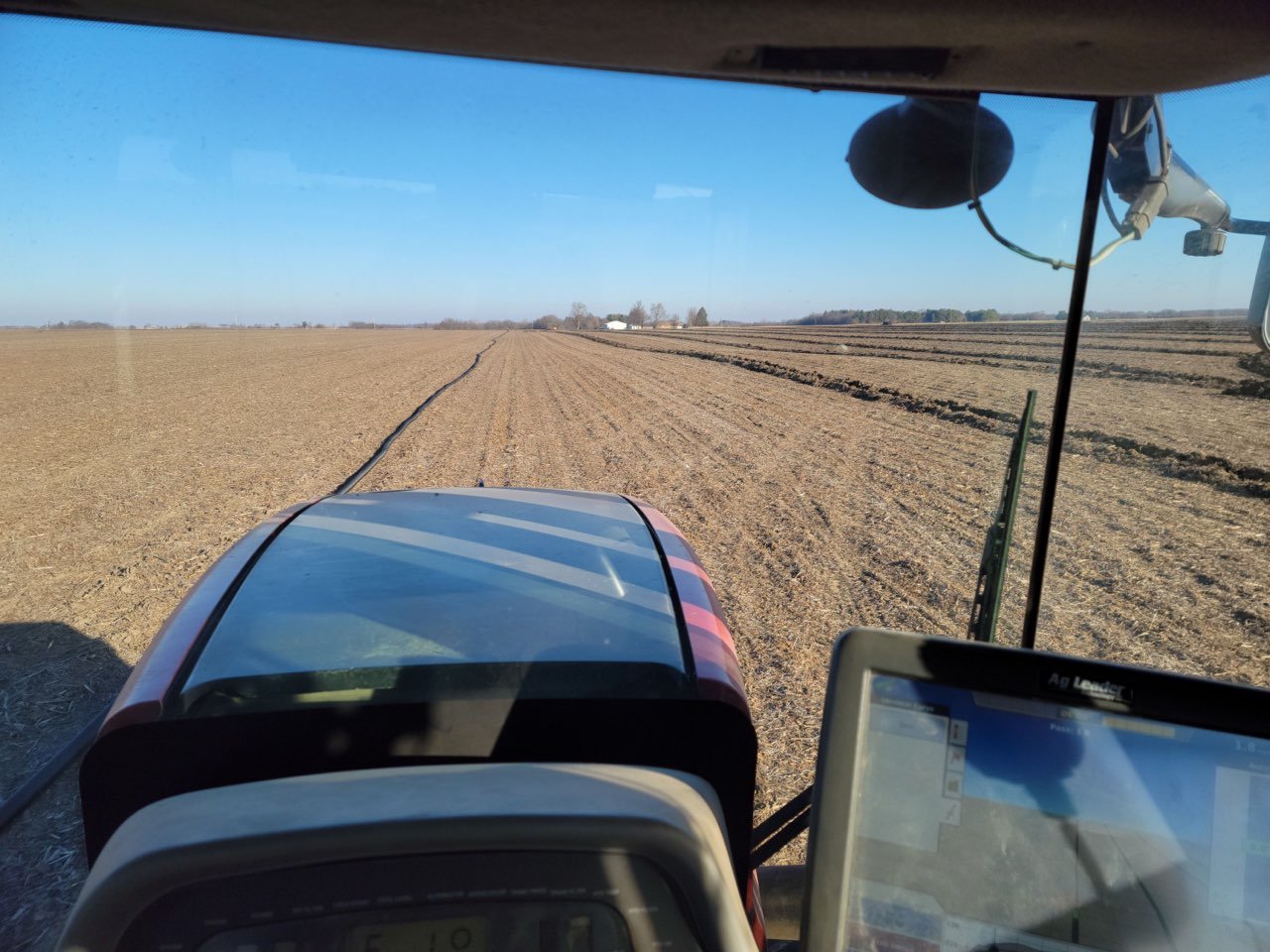
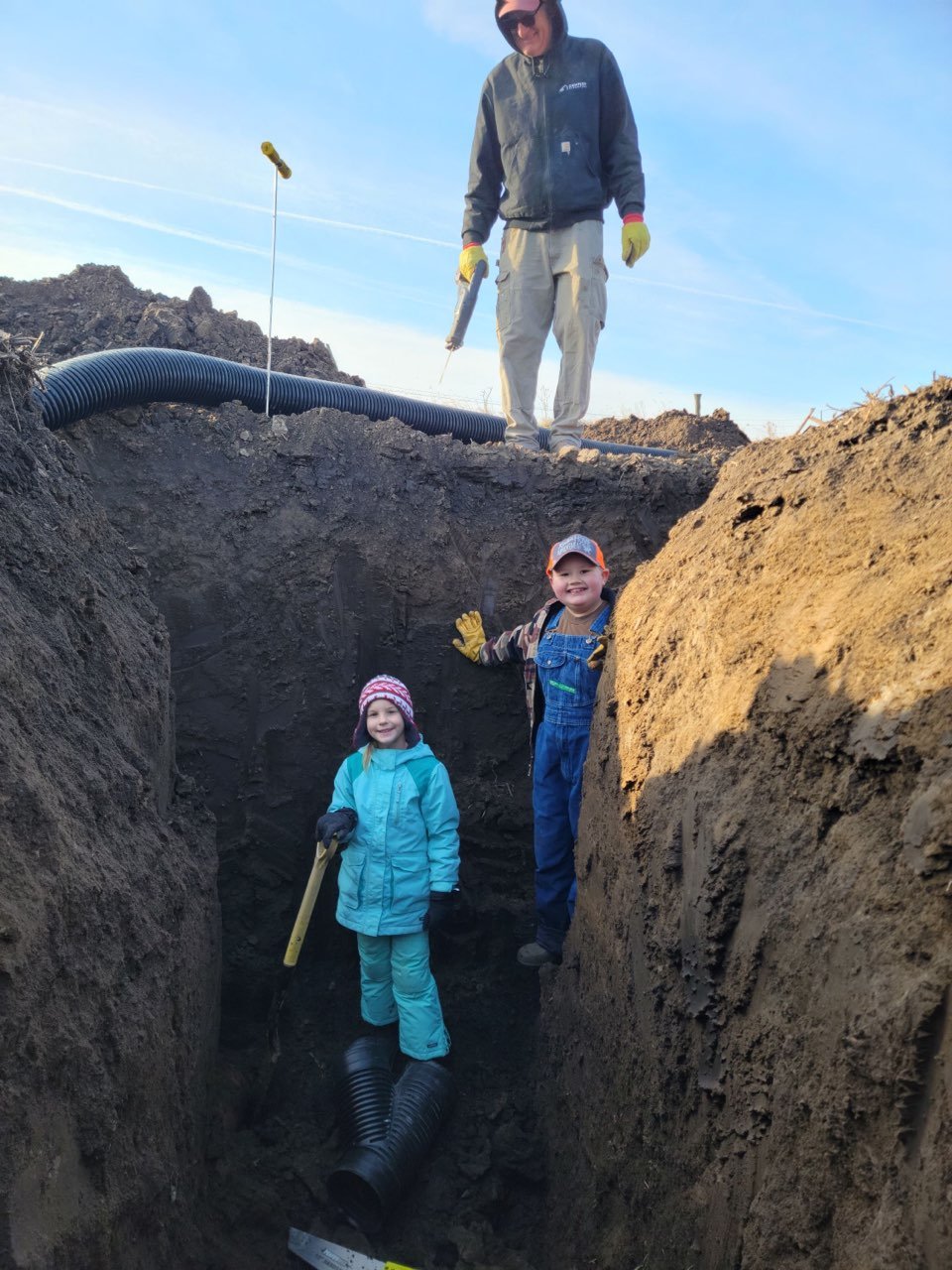
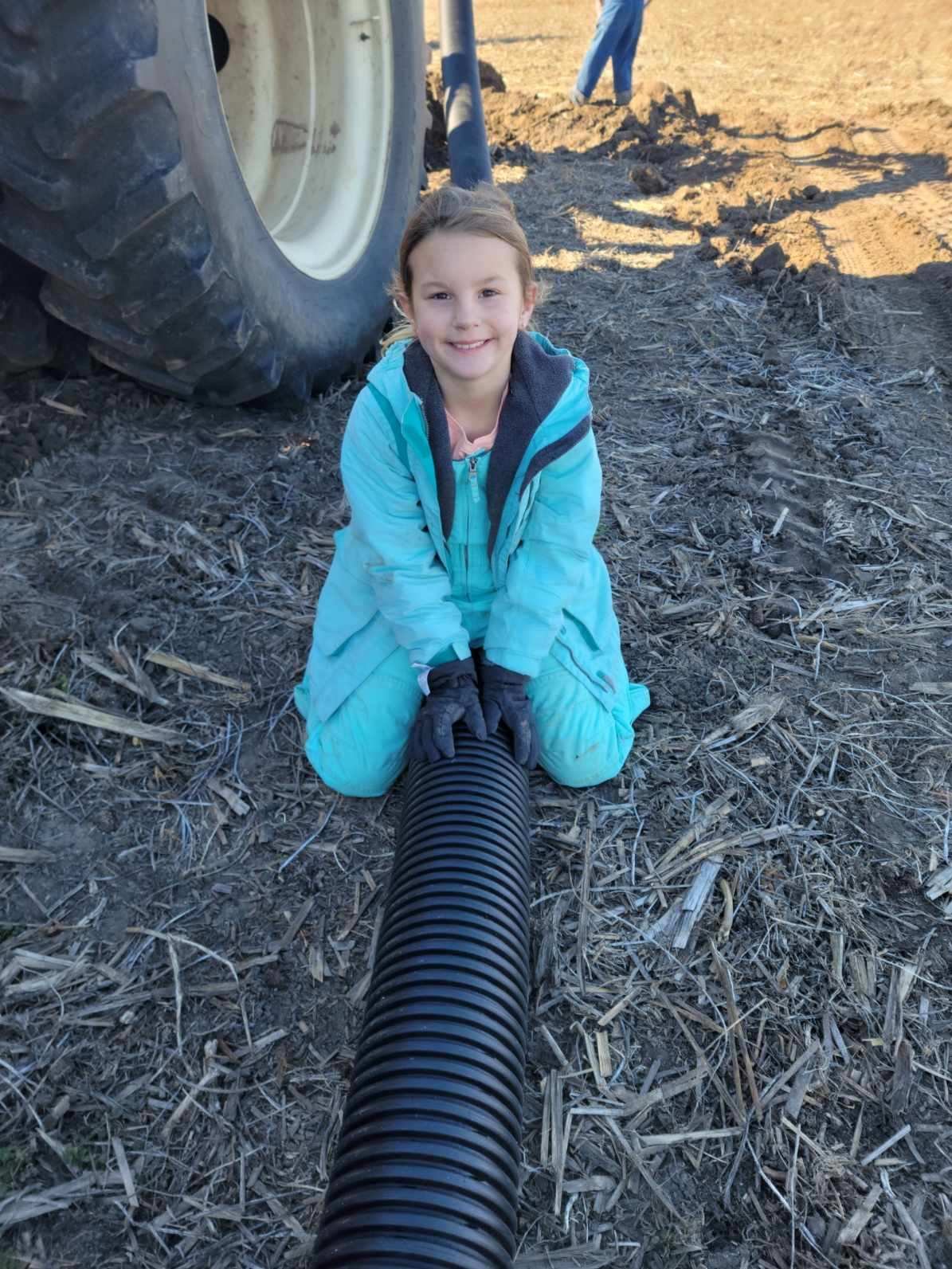
Over the years you have heard us talk about the value of underground drainage tiling on the acres we farm. Ever since Charles purchased our first tiling machine—the Buckeye 301—in 1974, this farm has owned a machine to install tile. I put myself through college with that first trencher. After the first machine there was a Speicher 600, and now we have our current Soil Max Tile Plow. Over the years we have installed many miles of black plastic perforated pipe. Last spring was another example of the advantages of pattern tiled fields. Those fields that have complete systems installed were ready to plant sooner, soil conditions were excellent, there was no replant, and our highest yields were obtained there.

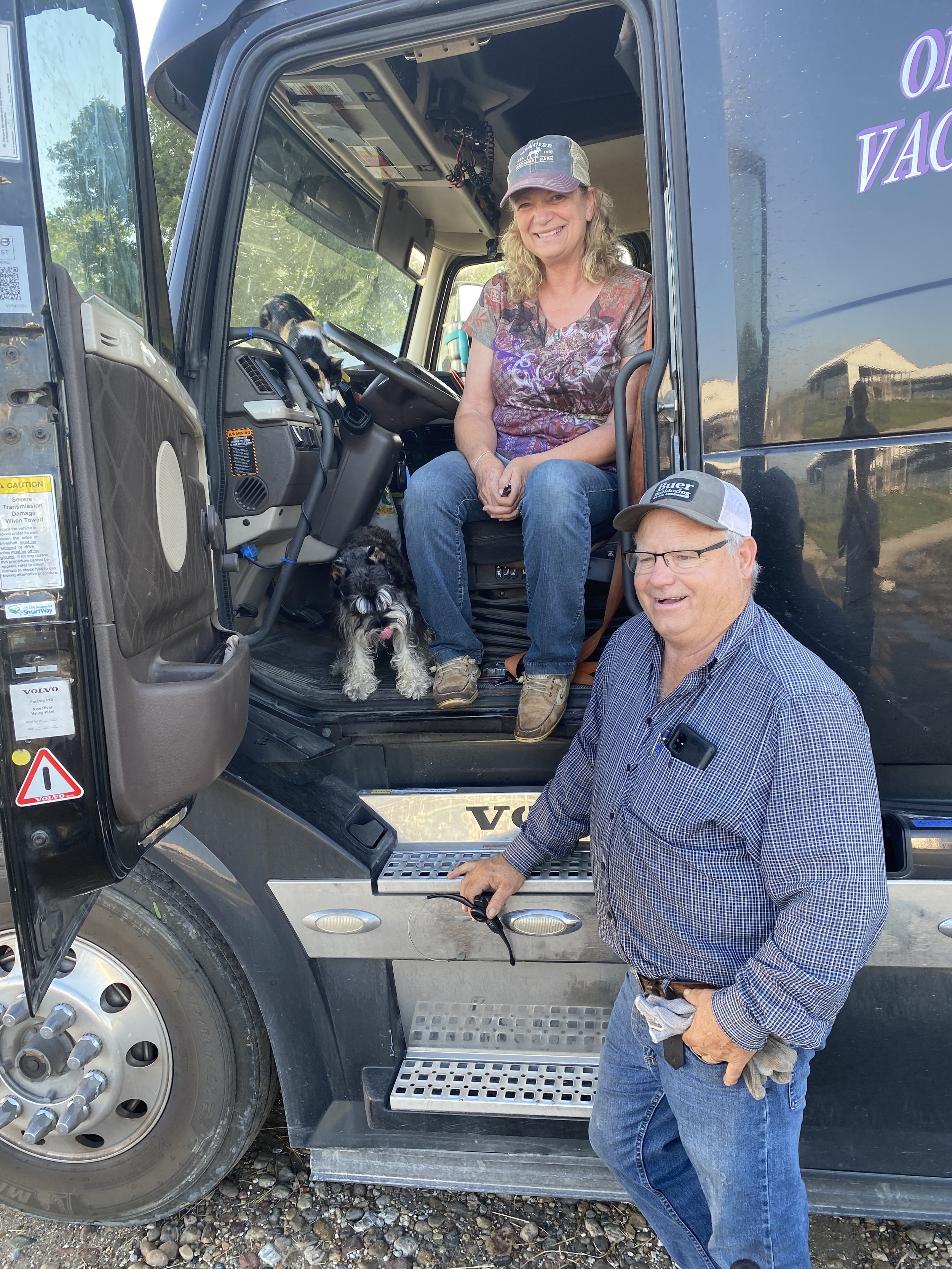
Included in the pictures in this post are a couple from Nauvoo, Illinois, that drive for Timewell Drainage, our tile supplier. This couple delivered tile to us from Kentucky! We accumulated tile all summer long because of supply problems last year after harvest. Last year we usually waited about 10 days after ordering to get tile delivered—this year we get it the next day. I point this out because a lot of these supply issues that we are now experiencing will be resolved. The companies and vendors that are going to survive will figure out how to fill the gaps and reap big long-term benefits from it. This company increased their capacity 40% in a year's time and are proving to be reliable suppliers. Others are following suit. And with prices much higher than a year ago, I would assume they are keeping margins in fine shape.

We are putting tile in the ground as fast as possible with the labor force we have. If the weather holds out we hope to install tile on over 300 acres this fall and that much again next year. We are also delivering non-GMO corn in our allotted window and coring the centers of the bins for grain quality purposes. Lots of tasks being put aside for now.

In the world, the EPA announced some resolution to the Renewable Fuel Standards yesterday—looks like it will help stabilize corn demand for now. Brazil’s bean crop is off to a great start with timely planting and sufficient rainfall. This time of year is uneventful in grain marketing. Input prices are looking to stay very strong into 2022. Some supply problems are looming with chemicals.

This is a great time of year to soak up the celebration of our Savior's birth. Attended the Chosen Christmas special last week (download the app if you haven't already). Time for Christmas programs and get-togethers with family and friends to help us appreciate all we are blessed with. Phyllis’ eye is slowly healing from this third surgery, the most painful yet. Prayers appreciated. The farm team Christmas party was a fun time—we appreciate our crew!

Current Prices:

Corn 5.84

Soybeans 12.49

Enjoy this blessed season and keep in touch!

Steve

Finish Line

Partners & Friends,

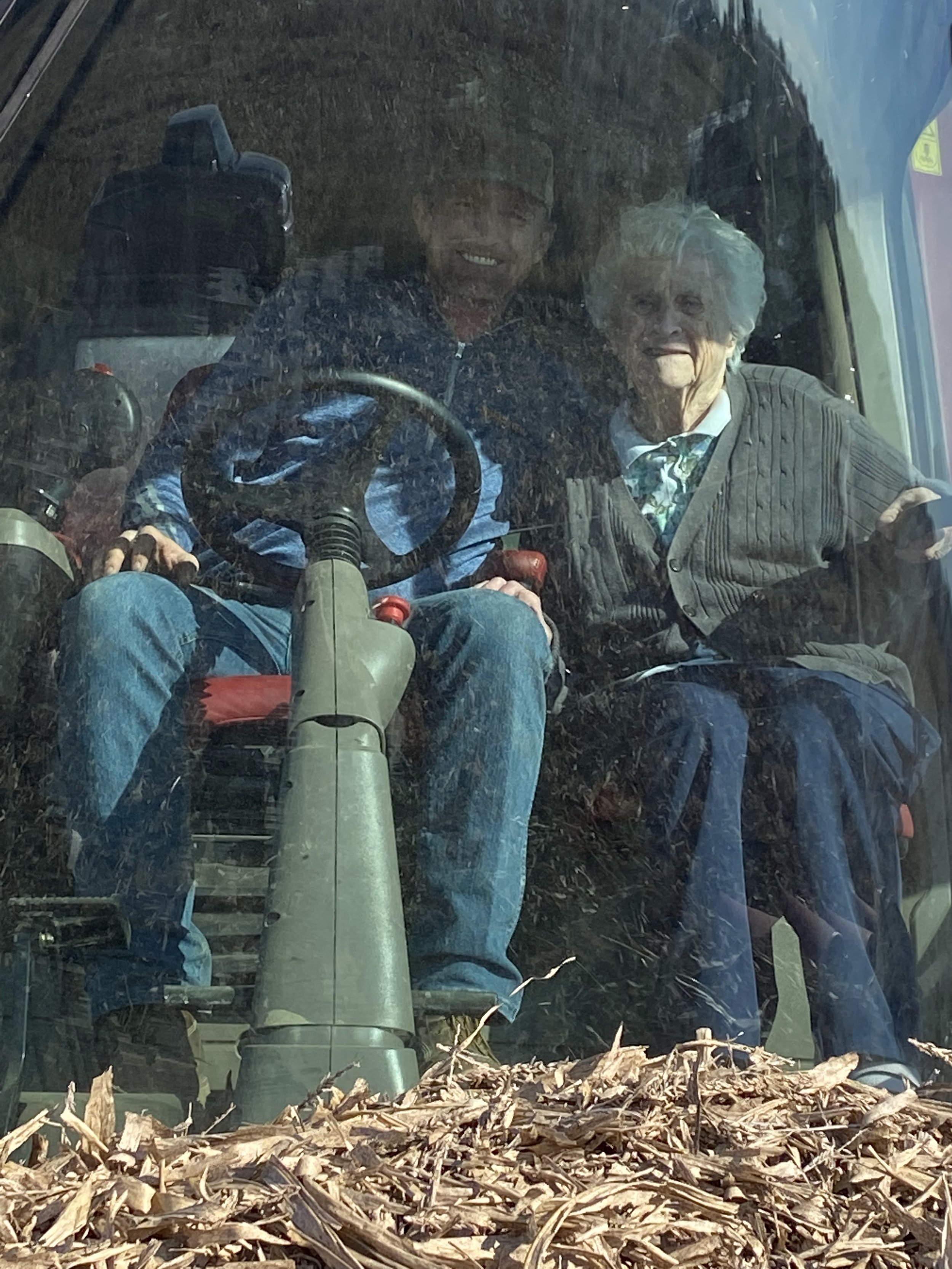
We finished up the last corn field Wednesday, November 3rd, about 9:30pm. On the last day, Oma (Wilma) came to the field to ride with her grandson, and got to help complete harvest on land she and Charles had purchased 58 years ago. It is a good feeling to be done with the combine for the time being. Now on to all the peripheral stuff that involves a lot of details to complete. NH3 application, field mowing, equipment washing, truck maintenance, fall burndown spraying, and tiling projects, to name a few. We are still plenty busy but the late nites have dissipated. We welcome the time change as it gives us more early light to get chores done and projects underway. We are giving thanks for the good yields that held thru the entire harvest season--probably our second or third best corn and bean yields ever. We will need some office time now to get analyses and summaries completed. We are facing parts availability issues on a couple of pieces of equipment, and it does appear there might be some supply problems for fertilizer next spring. We are so glad we did the bin site upgrade this year--the storage and time savings really paid off. We are monitoring the corn/soybean price ratio for this next year's crop to determine profitability for next year’s crop mix. As of now we plan on keeping our 50/50 corn/soybean rotation.

Farmer sentiment is waning as prices are sliding and there is so much uncertainty where the federal government is taking us for taxes and infrastructure. Planning is becoming difficult . Brazil is planting record bean acres at a very good pace. Livestock issues worldwide are causing concern for soybean usage and meal supplies. Ethanol production is at record levels and oil is surging higher. Seems like a perfect storm for something?

Family great! Phyllis is healing after her second retina surgery. Looks like she will have restricted activities for 2-4 more weeks. UChicago Family Weekend was interesting and well attended. Harper gave a great devotional at chapel this week. Getting thanksgiving plans organized--lots to give thanks for!

Prices currently:

Corn 5.48

Soybeans 11.92

Stay safe & keep in touch - appreciate any and all comments!

Steve

Heat of the Battle

Partners & Friends,

Sometimes harvest feels like we are in a war with the standing crops and each day we go see what we can conquer. In the middle of harvest sometimes it seems we are making little progress and then suddenly we realize we are much further along than we thought. As I have referred to before this fall, the stalk quality of the corn is very poor. We are dealing with downed corn stalk problems that we haven't seen in over ten years. The warm and dry weather has caused the corn to dry down very rapidly (which is good for saving on drying costs) but harvesting is getting to be a struggle; Monday we spent the better part of the day working through 40 acres. We did deal with a combine tire problem that day too, but usually we can easily harvest 100 acres a day.

But enough whining! Our new cornhead is a real lifesaver and really glides through the downed corn and picks up a vast majority of it. Also the crop is a good one--both corn and beans! Marcus keeps reminding us that despite all the challenges the crop is good! And the crew we have in place is really doing a great job of filling in gaps. We really appreciate all of them!

Commodity prices are sideways to steady for harvest--looking like we will see some strength in the future. It does appear that Brazil is planting beans at a record pace and more acres than ever. We are trying to lock in some inputs for next year and the nitrogen for corn seems to be the most challenging. Some chemicals are going to be hard to source, mainly because the suppliers cannot get plastic containers to put the chemicals in.

Family updates: We made a trip to the apple butter festival in Missouri last weekend. Harper took a position as a 4-H officer. Phyllis is recovering from retina surgery. A beloved Uhman uncle - the oldest surviving sibling - passed away this week.

Fall Prices:

Corn 5.26

Soybeans 11.92


Keep in touch!

Steve