We're Experts at Working From Home

Partners & Friends,

On one hand it seems like time is flying by, but with all the uncertainty in the world it seems like the unknown ahead of us is coming very slowly. As much as we are used to instant gratification in today's society the pace of "shelter in place" is perilously slow. At Hess Family Farm we are adapting to differences as best we can, including

  • Social distancing among families-keeping 6' between people when working or socializing

  • Staying home at night

  • Grocery shopping every 10 days

  • Ali is doing the last quarter of her second year at UChicago from home 

  • Watching Dr. Pol on Disney 

  • No hugging or spending time with grandkids

  • Riding in backseats transporting people—feels like being chauffeured

  • Watching someone fixing a machine and not being able to help

  • Not being able to visit my parents face to face

Someday we'll look back and say all this makes sense when we see the results. So far there have been very few positive tests in our area, but I feel it is just a matter of time till most have some exposure and get some sort of immunity. Like everyone is discussing, the world is going to be a lot different and this has only sped up the change that is coming. It does seem to be harder for older people to accept and adapt—keep us in your prayers.

On the farm we have completed the first pass of spraying all the crop ground. Last week we planted about 200 acres of soybeans. We are also fervently trying to repair issues from last year's extreme rains. We have hauled dirt to repair washouts for days. Our excavator has been used almost every day repairing tile holes. We have seeded several new waterways to prevent future erosion. Our corn planter has gone through another major rebuild with more technology added.

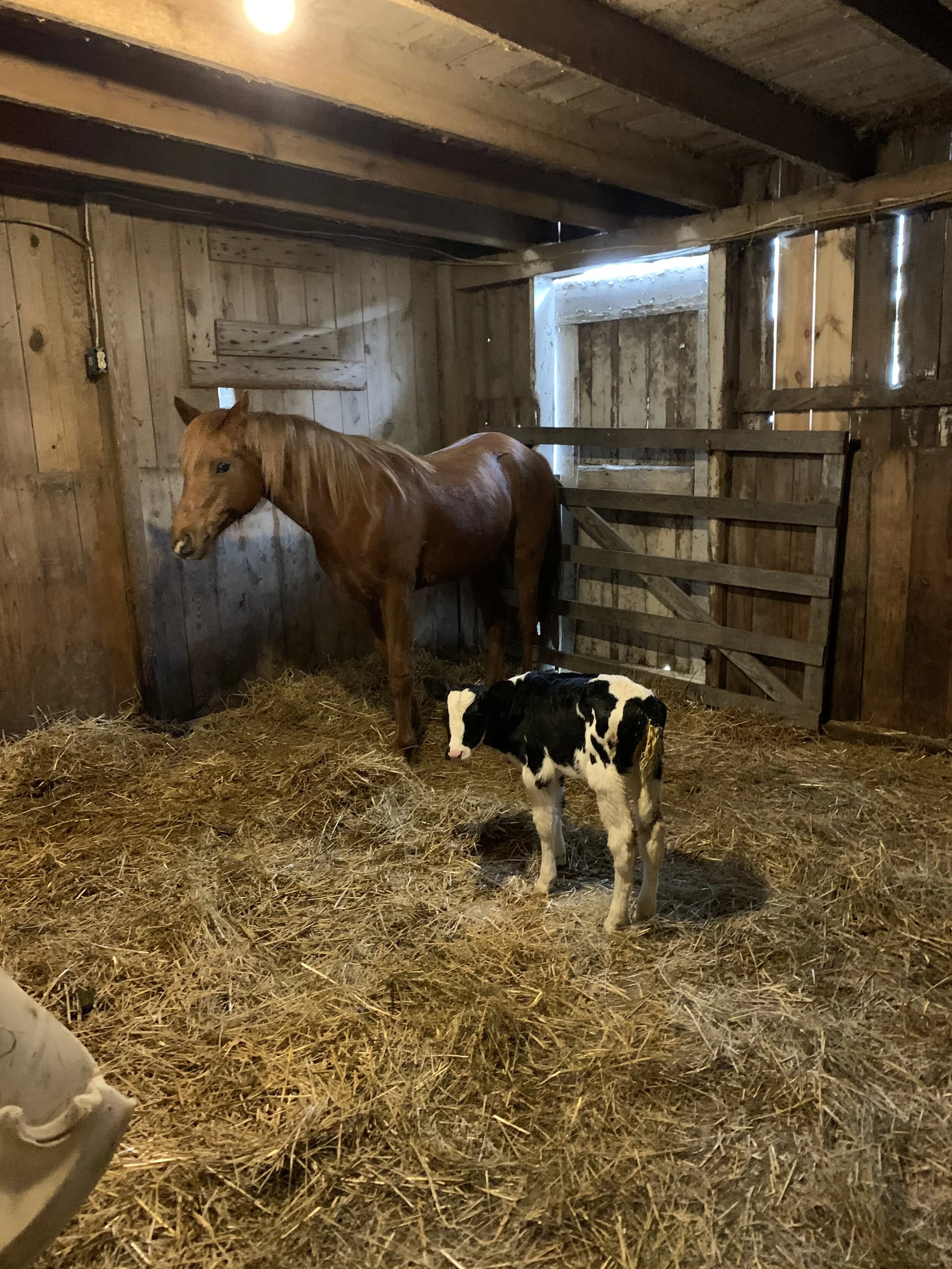
With Ali home she has rebooted our livestock enterprise with a group of bucket calves. We have also picked up a couple of beef cows for the pasture. We have been selling unused equipment online to clean up some storage space and we even purchased a combine online in Mississippi. We have been in on several zoom meetings with suppliers and could actually get used to the efficiencies of all this technology. I do miss the personal contact but the world is changing.

On the US agriculture front things are in chaos. I'm sure you are aware of pork and chicken processing plants closing, dairy farmers dumping milk, and the bottom falling out of corn prices due to ethanol demand and China not buying and the huge predicted planted acres forecast.  Even with government help this is going to be a very difficult year to stay on top of marketing, production, and finance (our three legs of the business). I have been lecturing my family. We need to be very aware of the future and how we can adapt to it. The opportunities are going to be great but I fear also the downsides will be horrendous.

Family is doing well. Having a college daughter taking class from home makes me ask the question, why not make this offering a part of education and skip the expense of college room and board? We are enjoying FaceTime and Duo to see the families but miss the personal time and hugs and cuddling. We were already used to church online when we travel but miss the face to face time there as well. Last Sunday we took in 3 services. One big concern I have is we are becoming more addicted to the news and feeling like we need to read and see everything. The downside of that is the news is so depressing it keeps us from realizing how blessed we really are. 

New Crop Prices:

Corn 3.17

Soybeans 8.51

Let us know how you all are doing.

Steve

2020

Partners & Friends,

Here in this season we pause to reflect on the past year and plan ahead for the next. We are constantly asking ourselves how we can make the operation more sustainable, do more with less, be more efficient, increase our margins, determine what our core competencies are and best utilize our resources. Here are some of our thoughts heading into next year.

  • Tile—our highest yields consistently come from the ground that is patterned drained. Earlier planting, more even stands, better root development, easier harvest and less soil compaction all add up to increase the ROI 

  • Seed Beans—raising seed gets us the newest and best varieties with the most yield potential, but means weed control must be tip-top, bin space is an issue, and combine clean-out on hot afternoons is the most unpleasant 

  • Equipment Efficiency—keeping track of hours per power unit and repair cost of each piece of equipment gives information about cost to operate, when it’s time to replace, and do we need it

  • Less Tillage—part of the effort to make the land more sustainable is fewer trips, less compaction, and covering more acres with existing labor

  • Management Zones—part of the strategy of our multi-hybrid planter is investing in the parts of fields with the most profit potential and accepting the lower-yielding areas for what they are

  • Marketing—this past season reinforced that we must take advantage of opportunities to lock in profit and that the market is always right

  • Human Resources—our most valuable commodity is people—team members, suppliers, grain originators, landowners; those relationships must be nurtured and maintained

There are lots of details involved in this list that must be managed for the bottom line to be positively affected. That's what our job is-to bring everything together to allow this 150 year-old business to carry on to the next generation. We appreciate all who are a part of this endeavor that allows us to keep our dream jobs.

It appears the trade talks have negotiated a Phase One deal. We anxiously await seeing all the details on paper and signed. The general economy seems so strong with the labor marker so tight. Hopefully this next year’s major weather anomaly will be somewhere else in the world. :)

We are all celebrating this Christmas season with family and friends while enjoying all the blessings we have been given by a very generous Creator. Lindsay is due with their 4th child any day now. Ali is dog and cat sitting close to college campus. Preparing for bringing in 2020 with family and friends.

Have a Great Contented New Year!

Steve

Wildlife

11/17/19 update: Done @ 5 pm yesterday! What a season 2019 has been. Looking forward to a new year and learning from the lessons of this one.

Partners,

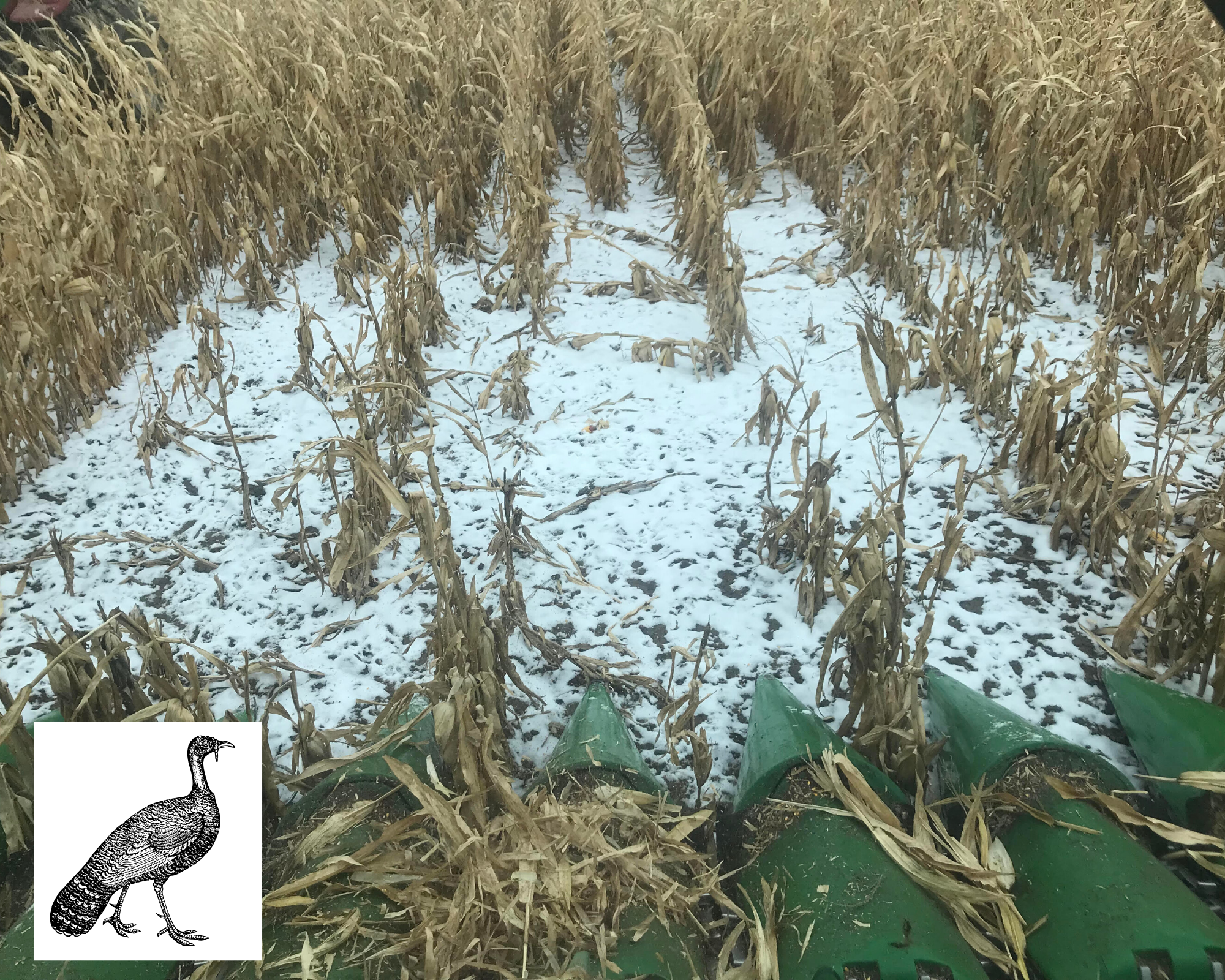
Each year at harvest time we get to appreciate—and be frustrated by—the amount of wild critters that are all around us. Some of our fields have up to 10% damage from turkeys, deer, or raccoons. The loss is more substantial in Fulton County, but almost all of our fields are close enough to some trees or stream or railroad that there are some signs of wildlife. While harvesting this past week I got some good pictures of the animal damage—with snow as a background—so I thought I would share. The financial loss is not talked about much and hard to quantify but on the yield maps the spots really stick out.

As of this morning (Friday), harvest is about two days from over. We have been picking corn on snow-covered ground this week. Thankfully there was little on the plants themselves. Snow and combine sieves don't mix well in freezing weather. The yields of the June planted corn are very average. This will be our lowest average corn yield since 2012. We finished beans this past Friday when we harvested the third planting on the bottom ground at my house (planted July 13th). They yielded a respectable 46bpa which seems incredible with that late of a planting date. We give thanks and praise for some growing anomalies. Marcus started NH3 application this week with our new-to-us tractor. We appreciate a big front wheel assist tracked tractor in the hard pull heave tillage. Using this tractor should allow us to plant directly into the NH3 strips next spring and eliminate some tillage, labor, fuel and time.


Commodity prices are drifting sideways in a typical, slow, drawn-out harvest scenario. We are not watching TV coverage of the going-ons in DC. Congress has had the USMCA on the agenda since last winter and now it looks like they don't have time to pass a trade agreement that will help our commerce.


School snow days in November don't happen too often. The extreme cold this early puts a fast spin on chores for the horses and cows. This past Sunday we enjoyed a violin recital.


Fall prices:

Corn 3.71

Soybeans 9.12


Keep in touch,

Steve

Solar Minimum

Partners,

We are keeping busy with plenty of summer projects and are now deciding which ones aren't going to make the cut this summer. Having spent the better part of the past two weeks repairing tile issues--which in large part were caused buy the rains this spring--we feel that a lot of effort is going into fixing and healing things caused by the weather the past 12 months (3rd wettest in IL on record). We are also down to just a few thousand bushels of corn to deliver, that being made possible by more normal river levels. Usually by July 1 we have the bins empty. but we’ve still been getting the equipment cleaned up and checked over from this planting season (lots of power washing for Josh, Aaron and Daniel). We have a few upgrade projects at the tower bin site to complete, and are holding out hope for some time on the lake. Yikes! School starts in 2 weeks!

Solar Minimum—google it. Apparently that is part of the reason for the cooler weather affecting the growing season. Crop conditions are struggling. we received less than 1" of rain in July, and there is very little in the next two-week forecast. The late corn is now tasseling and thankfully the cooler weather is providing some relief. The late beans are certainly short. The weather into mid-September will determine their fate. Thank goodness we were able to plant early for a few days with our two planters. The early planted fields look decent and will yield well although not above trendline. We are spraying insecticide with all the fungicide we are applying to help the plants fight the added stress of the Japanese beetle invasion. One benefit of the dryness is we are keeping up much better with the yard mowing. ;)

Nationally we are wondering where the trade battle will end. The demand side of the equation is being hammered each week with ethanol plant closings and export reductions. The livestock sector is looking at shrinking margins and now the feed supply is being curtailed. Hay supplies are tight and pastures around there are already being supplemented. No one ever said this job is boring!

Family is busy and preparing for the new school year. Found time for a Cubs-Cards game (courtesy of Compeer) and hope for a few times at the lake yet this summer. Ali still has another month at bringfido.com. Marcus and family had a great and relaxing time in upstate NY. Hoping for a day at the state fair.

Keep in touch—all questions and comments welcome.

Fall prices:

Corn 3.82

Soybeans 8.18


Steve

Showtime

Partners,

We officially quit planting on June 14. Then the rains came again and covered a lot of our replant work with water again! Now this past weekend we received another 3+ inches of rain. The equipment getting the most use these days are the sump pumps and the job we are getting good at is putting up the “Road Closed” signs. We still have about 400 acres of corn to sidedress with NH3. Over half of the beans are needing sprayed with a second pass--the weeds are growing quite well. The nearby markets have reacted the most to the crop problems which is preventing many crop pricing opportunities for 2020 and beyond. The Illinois river has been closed for over 6 weeks now. This is going to back up old crop delivery into new crop harvest and will definitely cause some long lines at the river terminals. Marketing this crop and the next several years’ will have important implications on future profitability. We attended three marketing meetings this past week.

There is great concern in the livestock industry about adequate supplies of feed for the next year. There are estimates of between 7 and 10 million acres that will be taken for corn Prevent Plant. Hay harvest has been quite delayed and we have lost at least one cutting of hay—nationwide. Areas that were not able to plant at all will have trouble sourcing nearby corn for grain and corn for silage, and feed costs will be substantially higher. We must sustain the livestock industry through this time, or in the future we will have even less demand for our crops. The harvest rules for Prevent Plant acres have been eased as far as haying or grazing. Planting a crop that has a chance to be feed-worthy will be challenging with the continuing rains. There are reports that half of China's hog herd has been wiped out with Asian Swine Flu. And projections that next year’s corn-planted acres could be over 100 million add to concern that we will immediately overproduce and get into a supply glut again.

We will be watching with much anticipation the talks this week between President Trump and the Chinese Premier. We need to find level playing field rules and keep both countries on a path of economic stability.

Show season has begun. Dog obedience was last week and coming up are bucket calf and food items. Alison is learning a lot about doggie vacations for her internship at bringfido.com. And Grandpa is reminiscing and telling stories about the other years that were weather stressors like this one--74, 83, 88 and 93 are the ones that really stand out.


Fall Prices:

Corn 4.43

Soybeans 8.93

Questions and comments welcome!

Steve